Most apps will read for you. This one teaches you to read.
There's no shortage of apps that will generate an interpretation in fifteen seconds, but receiving another ready-made answer doesn't teach you to recognise the first impression that was yours, or to tell it apart from hope, fear and hindsight.
Tempath reverses the usual order by asking you to look first, say what you notice and only then see the teaching. That deliberate pause turns passive interpretation into a practice you can develop, because your own response has been heard before somebody else's meaning arrives.
The aim isn't to keep you asking an app for answers. It's to help you build a way of working that still belongs to you when your phone is in a drawer.
Seal it. Then find out.
Perhaps it's a sense about a conversation, a feeling about a decision or a card that won't leave you alone. You write what you think may happen, define what would count as a result and seal the entry, so that when Tempath later asks what occurred, the original impression is still there exactly as you expressed it.
There is no score and nobody else to beat. Over time, the record begins to show how impressions tend to arrive for you, the conditions that surround them and the moments when interpretation may have gone too far. Tempath calls this your Intuitive Fingerprint because it grows from your own words and their real outcomes, not from a personality quiz or a flattering label.
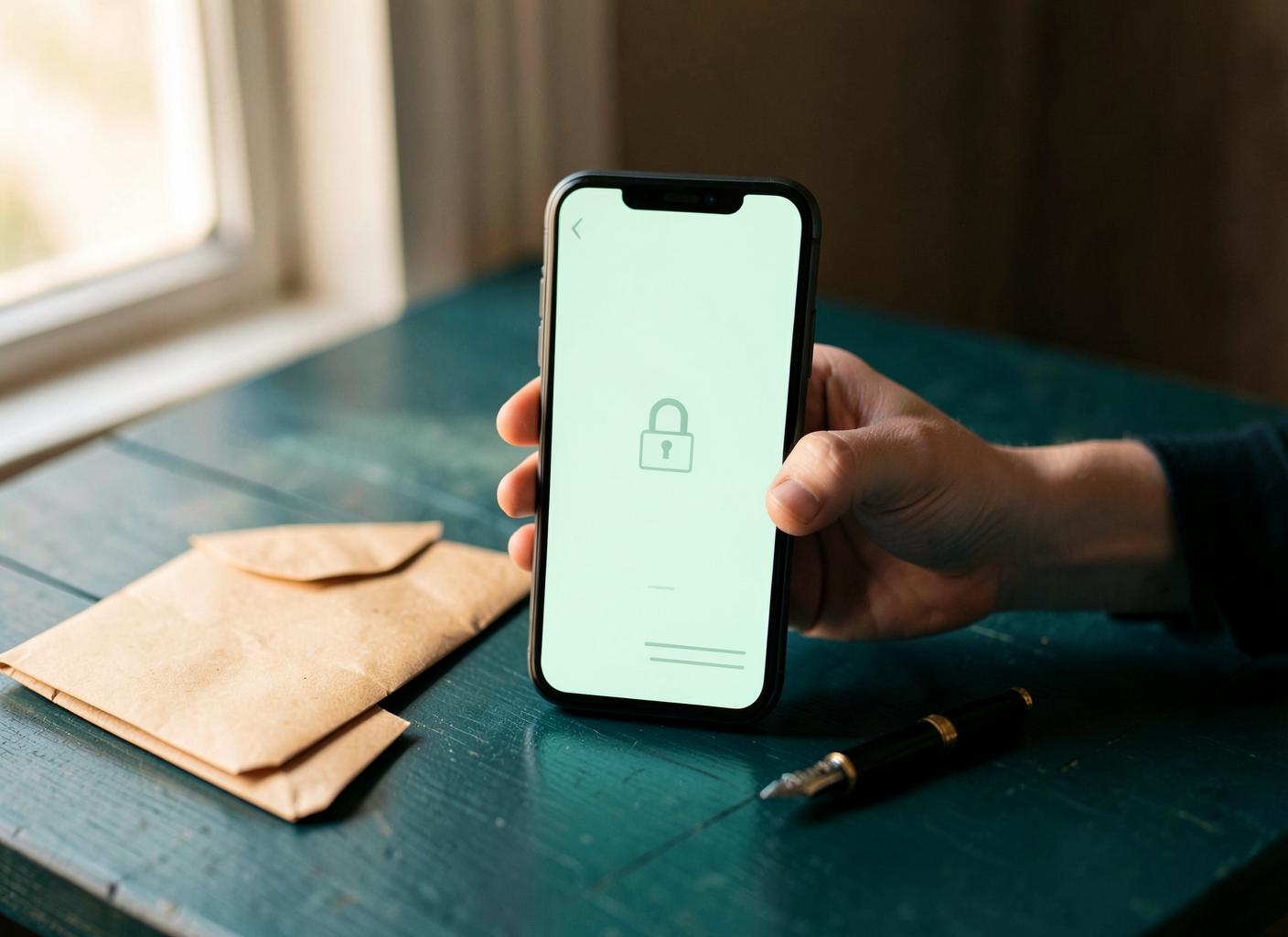
Memory rewrites itself in all of us. A sealed impression is the one thing that doesn't.
A record that stays honest
Write
Capture the impression in your own words while it is still fresh, including enough detail to know later what would genuinely count as it having happened.
Seal
Once sealed, the entry can't be edited to fit what happens later, protecting the difference between what you knew then and what is obvious now.
Return
Record what occurred, including a miss or an inconclusive result. Each return adds another piece to your Intuitive Fingerprint.
Tempath teaches the boundaries, not only the practice.
Credible intuitive practice requires limits as well as openness, which is why Tempath teaches consent, clear boundaries, grounding and closing down properly. It doesn't support predictions about death, health or pregnancy, or readings for minors, and bereavement material is framed with particular care.
The teaching also makes room for ordinary explanations and is clear about when qualified support is more appropriate than intuitive practice. Those boundaries don't diminish the work; they are part of what makes it responsible.
Six practices, one place
Cards are one way in, not the whole app. Sensing, spirit, energy, dreams and prediction add to the same practice record, so you can notice how intuition reaches you rather than forcing it through one method.
Cards.
Meet all 78 tarot cards through short lessons that begin with the picture, not somebody else's interpretation. Look first, record what you notice, then learn. Daily draws, oracle decks, spreads and a library give you different ways to practise.
Sensing.
Work with feeling, touch and the first thing that arrives before you've had time to explain it away. Record the impression while it's still yours, not after you've tidied it into something more convincing.
Spirit.
Record contact, signs and what seems to arrive without being asked for. Writing it down at the time lets you return with a clearer head instead of relying on memory alone.
Energy.
Learn how to prepare, ground, clear and close down properly afterwards. These aren't decorative rituals. They are practical boundaries for choosing when you are, and aren't, open to the work.
Dreams.
Set a question at night, capture what you remember in the morning and build a record worth reading back. The point isn't to make every dream meaningful. It's to notice what returns.
Predict.
Write what you think may happen and decide in advance what would count. Once sealed, the record stays put. A hit, a miss and an uncertain result all remain useful.
Whether you're beginning or refining years of practice, Tempath meets you there.
If you're new
Start with one card, one look and one note. Lessons explain each term when you meet it, so you don't need a deck, a vocabulary or a belief system before you begin.
If you already read
Sealed impressions give you something the tradition rarely does: a record made before you knew the result. You can see where your impressions begin, where interpretation enters and what hindsight would otherwise smooth over.
If you work professionally
Discernment, consent and ethical limits sit inside the teaching. Tempath names when an ordinary explanation needs considering, and when a person needs qualified support rather than a reading.
If you're sceptical but curious
You don't have to decide what you believe. Write down what you sense before you know, then return to the unchanged record. Misses and uncertainty stay in it too.
Begin small enough to notice.
One clear prompt each day gives your practice somewhere useful to begin.
Today
Begin with a Ground Check, one daily card and a brief note about anything you noticed, giving you a manageable way into the method without asking you to absorb every practice at once.
7-Day Journey
Follow one suggested practice each day, using enough structure to keep returning while your own record, rather than a generic assessment, begins to reveal what is genuinely yours.
Guidance
Turn to clear lessons when you need context, a considered next step or an ethical boundary, without handing the interpretation over to the app.
My Path
Keep your notes, sealed impressions and later returns together, creating a record you can examine rather than a version of events reconstructed from memory.

A psychologist who reads. The app comes from holding both seriously.
I'm a Chartered Counselling Psychologist and an HCPC-registered Practitioner Psychologist with 26 years in practice, and I've been reading for just as long. Tempath grew from taking both disciplines seriously, without asking either one to become something it isn't.
Holding both has never felt like a contradiction. Intuitive practice asks for close attention and pattern recognition. Psychology adds another discipline: noticing when the evidence has run out.
That is why Tempath asks you to commit before you know, keep the misses and consider ordinary explanations. It is also why the teaching has clear limits around consent, sensitive subjects and when a person needs proper support.
That's the difference between developing intuition and flattering it.
Author of The Psychic Psychologist (Hay House), winner of a Nautilus Book Award.
Try the method for free. Pay when you want the whole practice.
The free version gives you a daily card, your first lessons and a practice record. A membership opens every practice, the complete card library, sealed impressions and your Intuitive Fingerprint.
No card needed to start free.
Cancel any time. Access continues until the paid period ends.
Only Soul Guidance uses credits. Core practices are never metered.
Free
- The daily card, every day
- Your first card lessons
- Your practice record
- No advertising, ever
Tempath,
£9.99 a month
- All 78 card lessons and the full library
- Every practice: sensing, spirit, energy, dreams
- Sealed impressions and your Intuitive Fingerprint
- Spreads, oracle decks and the recall quiz
- Soul Guidance, with a monthly AI allowance
- The 7-Day Journey, Guidance and My Path
Tempath annual,
£89.99
- Everything above
- Three months free
Buying here rather than in the app means more of it reaches the work. The app store price is higher because the store takes its share.
SubscribeFAQ
You don't have to decide what you believe before you begin.
Is it all tarot?
No. Cards are one of six practices, alongside sensing, spirit, energy, dreams and prediction. You can use Tempath without making tarot the centre of your practice.
Do I need to know anything about tarot to start?
No. The lessons begin with the picture and explain each specialist term when it first appears. You don't need to own a deck.
Is this fortune telling?
No. Tempath is for learning and practice. It asks you to notice what you pick up, commit to what you mean and return to what actually happened. Some impressions will fit, some won't and some will remain unclear. All three belong in an honest record.
What if I'm sceptical?
You don't have to believe anything in advance. A sealed impression gives you something more useful than reassurance: your original words, fixed before the result was known.
What's the AI used for?
Only Soul Guidance uses AI. It reflects on what you've written using the frameworks I teach. A visible monthly allowance shows what you have left, with optional top-ups. Your lessons, journals, card work, sealed impressions and Intuitive Fingerprint are never metered.
Does the app tell me what my cards mean?
Yes, but only after it asks what you see. Answering first is how you learn to read the image rather than wait for the app to do it for you.
Is my data private?
Your journals and impressions are yours. You can export what you've written, see what Tempath holds about you and delete your account and its data.
Can I cancel?
Yes, at any time. You keep access until the period you've paid for ends.
Will this replace therapy or medical care?
No. Tempath names when an experience may have an ordinary explanation, or when professional support is more appropriate than intuitive practice.
Your intuition is already working. The question is how well.
It is easy to remember the times you knew and quietly lose the times you only thought you did. Tempath keeps both in the same honest record, so your confidence can rest on what you actually noticed before hindsight had a chance to improve the story.
Keep the record that memory can't.
No card needed. Start with the daily draw for free.